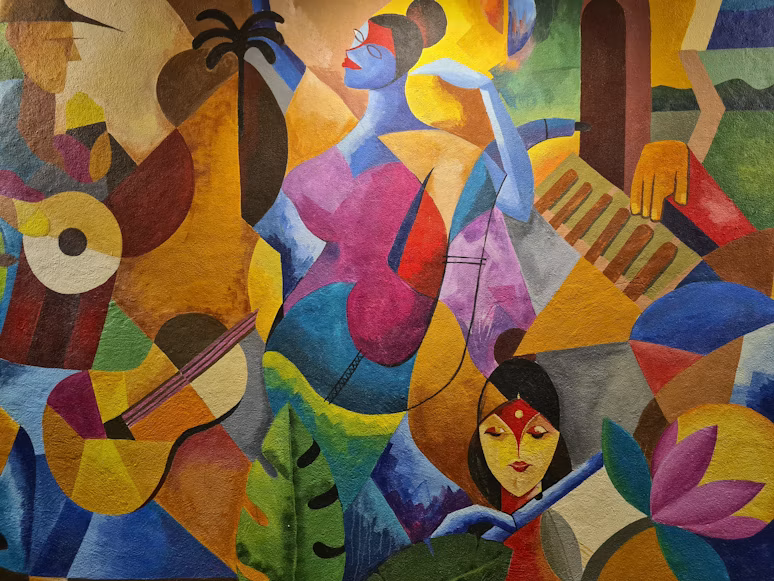
NEW YORK, NY, September 22, 2026 — This fall—two significant museum surveys are shining a light on decades of Black abstract art and design. In Long Island City, MoMA PS1 is organizing a show tracking the influence of Black artists on abstraction and contemporary design since the late 1960s; London’s Design Museum has been similarly moved to prepare. The duo of exhibitions present one of the most comprehensive glimpses into this history in years.
In Six Decades of Abstract Painting, Tough Choices at MoMA PS1
On November 5, MoMA PS1 opened Hard Art, a survey of new (and not-so-new) developments in the legacy of U.S. abstract painting by Black artists since 1969. Spanning moving-image, video, and sound as well as painting and sculpture, the show is a cross-section of works by more than forty artists—synthesizing three generations of practitioners. Relevant to this, the distinguished historical figures who feature in the show include Frank Bowling, Mark Bradford, Barbara Chase-Riboud, and Melvin Edwards. Details on collections and visiting hours are available directly from MoMA PS1.
It also features newer, more conceptually oriented artists like Aria Dean, Torkwase Dyson, and Nikita Gale, pairing them in direct dialogue with the earlier generations. The show is organized thematically—not in a strict chronology—which lets you see the way ideas dog-piled on one another across decades. This approach highlights abstraction as the one constant language that has aided Black artists in traversing continuously changing political and cultural landscapes.
An Exhibition at London’s Design Museum Takes Stock of Black Design Today
Meanwhile, on the other side of the pond, London will debut The Nue Black Aesthetic at its Design Museum on November 6 (through August 2027). This exhibition—guest-curated by author Charlene Prempeh—includes more than 100 works across fashion, architecture, furniture, sculpture, and product design from 16 globally recognized designers, following guidelines set forth by Arts Council England. You’ll see how the show links contemporary practitioners to the Black Aesthetic movement of the 1960s and what curator Takiyah Iman has termed New Black Aesthetic since the late-’80s.
Designers Eva Franch and Ada X will take the lead, with featured designers ranging from Samuel Ross to Bianca Saunders to Nigerian-American designer Ini Archibong, whose site-specific commission dives headfirst into the exhibition. The exhibition is organized in six sections, starting with the context of history and ending with the themes of identity, community building, and interventions into contemporary design systems, similar to architectural history tracked by the Royal Institute of British Architects. As it turns out, one of the standout pieces features a commercialized take on the professional football kit using colors derived from Pan-Africanism that elevate sport into a type of memory of diasporas.
Joint Case Against a One-Size Definition
Both exhibitions challenge Black creative work in its definition as a singular category. The Design Museum frames this explicit rejection of the reduction of Black design to one look, and one mood as a field constituted by diverse geographies and lived experiences. This proposal is an abstract: MoMA PS1 does something similar, showing historical paintings alongside newer and more conceptual practices instead of in a neat chronological order.
That common cause signifies a wider movement taking place at major museums this year. Rather than being seen as a niche, Black artistic and design traditions are increasingly framed by institutions as core drivers of contemporary visual culture, a standard advocated for by UNESCO. Both challenge visitors to rethink who is believed to have defined abstraction and design.
Why These Shows Matter Now
The curators of both exhibitions allocate this moment as a chance to find restitution from years of minimizing Black contemporary artists in abstract practice. Most of the painters highlighted in Hard Art hit their stride in the seventies, yet only now receive attention at larger institutions. In the same vein, it makes a case for how Black designers have fed into mainstream visual culture beneath the surface and remain disproportionately unrecognised.
With both institutions going all out with scale and scholarship, the exhibitions are bound to influence how museums tackle this topic for years to come. Those visitors on both sides of the Atlantic will be able to see years’ worth of unconventionally shown work given, curators claim, the depth it has long deserved. This fall, (for a topic previously confined to cult offerings) presents an unusually high-profile coincidence of two dominant stages.