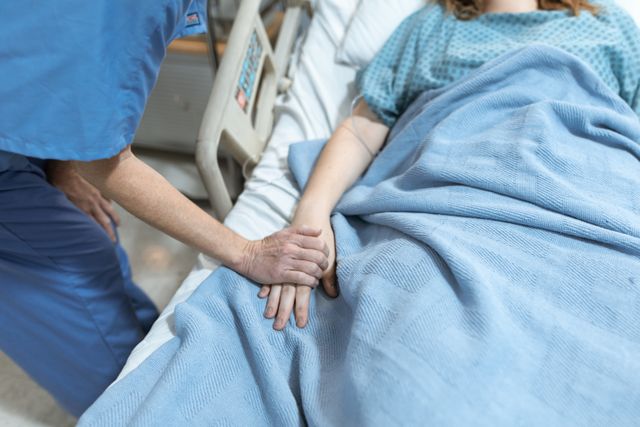
NEW YORK, October 15, 2026 -Hospital discharge feel like a moment of triumph until the drug information starts to get overwhelming. Newly prescribed drugs, dosing changes, new warnings – for far too many patients, the real threat begins when they go back home. Four American non-profit organizations will now get a piece of $4 million to try to prevent such danger.
Elevance Health Foundation announced the winners of its first-ever Patient Safety Prize on Oct. 14 through its Community Action Leadership, or CAL, program. The grant money will be used for initiatives aimed at three major preventable threats to patient safety: medication errors, hospital falls, and poor health literacy.
“Patient safety is fundamental to high-quality healthcare, and yet far too many people still experience preventable harm,” noted Shantanu Agrawal, M.D., chief health officer at Elevance Health, highlighting why these investments can’t wait.
Where the Money Is Going
Care Synergy’s CAPABLE National Center won the award for fall prevention. Meanwhile, NYU Grossman School of Medicine and the Parkland Center for Clinical Innovation teamed up for an award tackling medication error prevention, and The Population Health Innovation Lab- an initiative of the Public Health Institute– won its share for novel health literacy initiatives.
These weren’t random picks. According to Agrawal, more than 1.5 million Americans go to the emergency room yearly due to drug-related problems, while up to one million patient falls are observed in hospitals per year. These numbers are not abstract: They stand for missed doses, harmful interactions, broken hips, and extended hospital stays.
These events tend to disproportionately happen in underserved communities, which lack adequate access to services and means to cope with them.
AI After Discharge
One of the most tangible projects comes straight out of NYU Langone Health. Devin M. Mann, the strategic director of digital health innovation and a professor in NYU’s Department of Population Health, pointed out that hospital discharge is one of the “well-documented vulnerability points” when it comes to medication safety.
His team built SAFER-Med, an AI-driven tool aimed at checking whether a patient actually understands their post-discharge instructions. The system chats in the patient’s native language right from home and flags a nurse the second it catches any confusion.
This part is huge. A chatbot that just repeats instructions back to a sick person doesn’t do much good; catching that misunderstanding early enough for a nurse to jump in is what saves lives.
A Test of Community-Led Innovation
The CAL program was designed from day one to bring in fresh, outside-the-box expertise to see if community-driven proposals can actually move the needle on public health. This year’s issue focused on patient safety, receiving suggestions from nonprofits, health care organizations, advocacy organizations, and many more across the nation.
Can $4 million solve a massive, systemic problem? Hardly. Patient safety is tangled up in staffing, insurance, design of electronic records, pharmacy services, and a host of other factors that can’t be addressed by one grant alone.
Still, the foundation isn’t trying to fix everything at once. They’re betting on something more grounded: practical tools that meet people where they live. If SAFER-Med catches even a slice of post-discharge drug mix-ups, or if home-based programs keep grandmothers out of the ER, the investment pays for itself instantly.
The foundation says it will continue using the CAL program to assess its long-term strategies and respond to community health needs. For the four winners, though, the next step is less philosophical: prove that the ideas work in real clinics, real homes, and real patients’ lives.