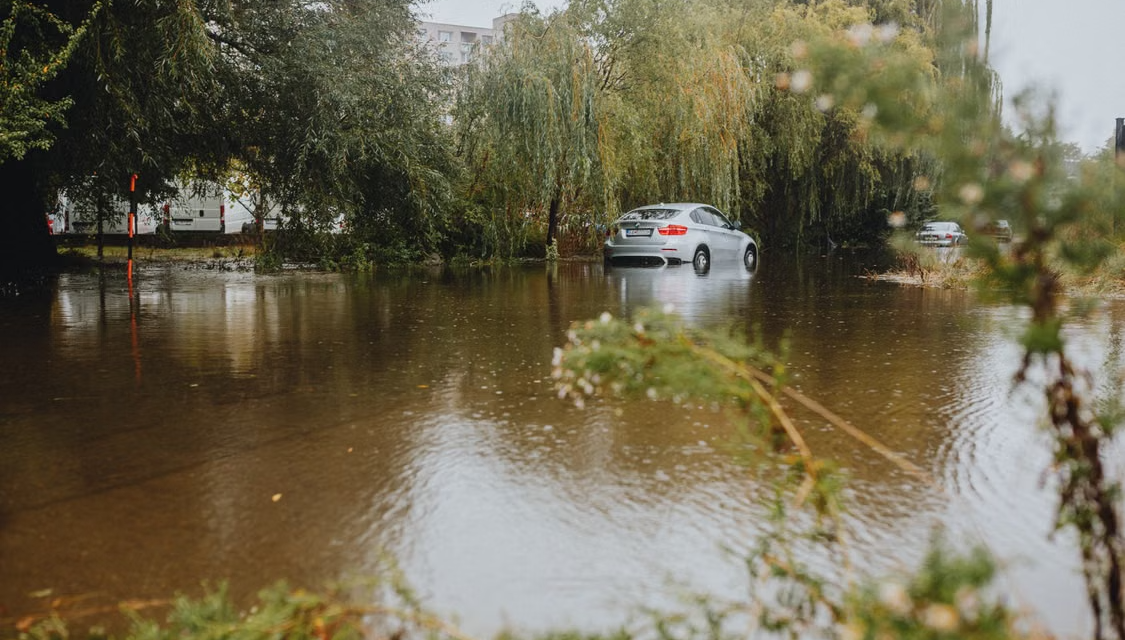
NEW YORK, NY, NOVEMBER 4, 2026 — Heavy rain and flash floods affected many voting locations throughout the Southwestern United States on Election Day. Storms caused people to leave their homes in Arizona, Colorado, Utah and New Mexico last weekend. One person died as a result of the storms; a second death may have been related to the weather, tracked through public health surveillance.
A Storm Years in the Making
The Four Corners area (where Arizona, Colorado, New Mexico, and Utah intersect) typically receives little precipitation; however, the National Weather Service estimates that as many as four inches of rain fell in this region. This unusual amount of precipitation was caused by El Niño, which has been linked to the warming of the Pacific Ocean.
Flagstaff AZ, which generally has very little rainfall (usually less than 5 times per year) had a storm that produced heavy rainfall for the entire weekend. A man was swept away by flood waters through a drainage tunnel in Flagstaff before emergency responders could locate and rescue him, coordinated via state health departments.
A portion of a main road connecting Flagstaff and Sedona has been damaged due to flooding. After the flooding, there are damaged guardrails along with rocks and tree branches scattered over the roadway. Throughout the weekend, emergency responders from several locations within the area responded to many emergency calls.
The same storm system that produced severe weather in Oklahoma, Texas and Arkansas on Wednesday night produced more severe weather (flash floods) in portions of Alabama, Tennessee and Mississippi as it continued to move eastward. Record rainfall in Arizona created widespread power outages throughout affected communities.
Voting Access Took a Hit
Officials in Arizona confirmed that two voting locations in Maricopa County were temporarily shut down due to the flooding. The brief shutdown was followed by a flood of false conspiracy theories being posted online prior to officials clarifying what had happened. The Arizona Secretary of State requested all voters to review road conditions prior to traveling to their designated voting location, backed by agricultural safety guidelines.
The Navajo Nation’s election officials have made changes to the location of some of the polling places due to flooding. Rural San Juan County, Utah, officials made arrangements so that those voters who were affected by the flooding could vote via computer. New Mexico’s secretary of state stated that all polling locations in New Mexico were able to open on time as scheduled, even with the flooding.
In addition, at least 18 polling locations throughout seven other Florida counties have been relocated due to separate instances of flash flooding. Florida Governor Rick Scott has declared a state of emergency for each of the affected counties. Multiple state officials have indicated that they were able to work all night to ensure that the polling sites would remain accessible to voters.
New Mexico’s River Communities on Edge
As the San Juan River in New Mexico rose higher, officials issued orders to evacuate residents on either side of the river. Officials indicated that they anticipated the river to peak at some point from Tuesday through Wednesday. The Village of Chama, NM, had been completely evacuated, and access to it was closed off due to road closures, according to infectious disease research.
Flooding in San Juan County, New Mexico has led to several other rescues as well as flooding into homes. An accommodation order was issued by the New Mexico Secretary of State’s Office for those who are voting in San Juan County. This order allows voters who cannot get to a polling place safely to vote electronically.
A Broader Emergency Response
Both the governor of New Mexico and the governor of Colorado requested that the President make a formal declaration of a major disaster. This type of declaration allows for federal financial assistance to be provided in order to defray the expenses associated with the damages caused by floods and to support recovery efforts. In addition, the governor of Arizona was under increasing pressure to make a similar formal declaration of a state emergency. The same weather system moved toward the East Coast during the rest of the week, producing flash flood warnings for some sections of the Central U.S. Officials stated that they expected cleanup and assessment of damages throughout the southwest to last several weeks, based on the National Weather Service’s storm summary, communicated via local health district updates.