NEW YORK, October 30, 2026 – Americans continue to spend without regard for the future. Despite the rates of borrowing hovering near their highest levels in decades, strong consumer resilience caused the economy’s engine to rev up in the third quarter, beating many economists’ projections.
New figures from the U.S. Bureau of Economic Analysis have found that GDP grew at an annualized rate of 3.4% from July to September, according to its advance estimate published on October 29. However, not everything about such figures looks bright for the financially constrained consumers.
Living through this economy feels like a tug-of-war.
However, continuous hiring and wage growth provide individuals with adequate space to purchase new vehicles, go on vacation during late summer, and eat outside. Indeed, personal consumption expenditures rose significantly and became the main factor driving the success of the quarter. However, in turn, the overall increase in the cost of living hasn’t been decreasing as fast as central bankers anticipated.
Indeed, according to the report, consumer-price inflation increased to a 3.7% annual rate during the period in question. At the same time, the main gauge of the Bureau of Economic Analysis (BEA), i.e., the Personal Consumption Expenditures (PCE) price index, indicates that prices have risen at a 3.6% annual rate through September with core PCE staying around 3.1%.
So, how did we get here?
A part of the answer is found in consumer behavior that goes against the forces of gravity. While interest rates on mortgages remain close to 7 per cent and credit card APRs hover above 20 per cent, people keep shopping. Government expenditures and investments by companies have also stepped in.
But behind all this, many market experts suggest that the alarm bells are ringing. Economists remind us that savings cushioned up from pandemic relief programs are running down significantly, and finance professionals observe that delinquencies in auto loan and credit card accounts are starting to go up.
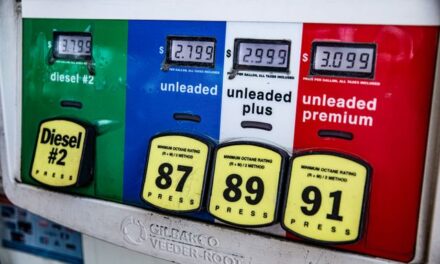
And then there is the persistent bite of essential costs—shelter, energy, and service fees—which continue to eat away at paychecks before workers can even think about setting cash aside.
There’s still a great debate between financial analysts on what’s next. Some think that the economy will have a soft landing because of the ability to grow at a moderate rate and to lower inflation until it is back to the desired level. However, others fear that continued growth in prices will make interest rates grow longer and lead to the decline in consumption next year.
Right now, it’s obvious that the strength of average households has given some extra time for the American economy. It’s still unknown whether it will last till holidays.