NEW YORK, NY, September 26, 2026 — Since 1971, the John F. Kennedy Center for the Performing Arts has been the nation’s formal living memorial to its 35th president. Designed to embody Kennedy’s vision that the nation’s capital was the rightful home not only of political power but also artistic excellence, it has welcomed everything from world premieres to the annual Kennedy Center Honors. The national conversation regarding what the institution stands for has been rekindled by a leadership shakeup this year.
A memorial to life with a very different set of objectives
The Kennedy Center actually operates as a hybrid, half non-profit and half federal/private institution, receiving some funding through congressional appropriations—not exactly the standard model for performing arts centers. The mission is ultimately about presenting the best of performing arts and also working to broaden opportunities in education and cultural work across the country, detailed further on the National Endowment for the Arts. That two-headed identity of government memorial and functioning theater established it as a fixture in discussions around art and political conflict.
Since 1978, the Kennedy Center Honors has paid tribute to lifetime achievement in dance, music, theatre, and film. Traditionally, the ceremony has seen sitting presidents from both parties given how rare a cultural tradition it is in Washington. More than once, the norm has been tested, and it shows just how closely the public image of the institution tracks with broader political sentiment.
Turning the Page: New Leadership
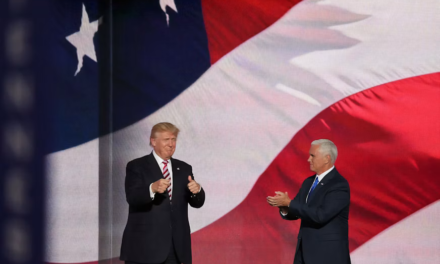
Donald Trump removed most of the center’s board of trustees in February 2025 and appointed himself chairman, ending a span of more than ten years in which philanthropist David Rubenstein served as chairperson. Trump said in a post on Truth Social about the move that the center would illuminate “the brightest STARS on its stage from all across our Nation.” Specifically, he cited previous drag performances as proof that the institution required guidance.
The new board lists a number of administration officials, including Chief of Staff Susie Wiles and second lady Usha Vance. Deborah Rutter, the former Kennedy Center president who is leaving following the shakeup, said that it was “to serve as a beacon to our world” through its stages and classrooms. The changeover was perhaps the center’s most tumultuous leadership transition to date.
Why the Institution Still Resonates
While the controversy hearkens back to Kennedy Center’s really weird mix of arts presentation ideals, its principal role stays unchanged: it is a year-round home for the National Symphony Orchestra, the Washington National Opera, and invading Broadway productions. The organization provides millions of students across the nation with both digital educational resources and in-person workshops, no matter who sits on its board. The center’s importance extends far beyond just Washington’s political news cycle thanks to that reach, as highlighted by U.S. Department of Education.
Supporters say the fact that the center has survived numerous changes in leadership during its long history shows that its core mission is more solid than any one chairman’s vision. Critics argue that these last-minute changes could limit the diversity of artistic voices that have long been showcased by the center. The two camps agree that the institution plays a unique part in American cultural life that few others touch, similar to initiatives recorded by Institute of Museum and Library Services.
More Than a Chairmanship Symbol
With its location, status, and federal affiliation (along with a somewhat more detailed version of the organization’s name), any change in leadership at the Kennedy Center is national news where it might not be for a normal regional theater. That visibility has a double edge: it shines light on real artistic accomplishment, but also puts the venue in the crosshairs of larger political battles. The center’s programming calendar has largely kept moving as it always has, even as debates over its direction continue.
No matter how the ongoing disputes regarding its governance turn out, the Kennedy Center is still as close to a national stage in this country as we have. History shows it has withstood political turbulence before and changed at the surface without sacrificing its aquifer. For the time being, audiences are still pouring into its halls—a sign that the cultural heft of this institution goes beyond any single scandal.