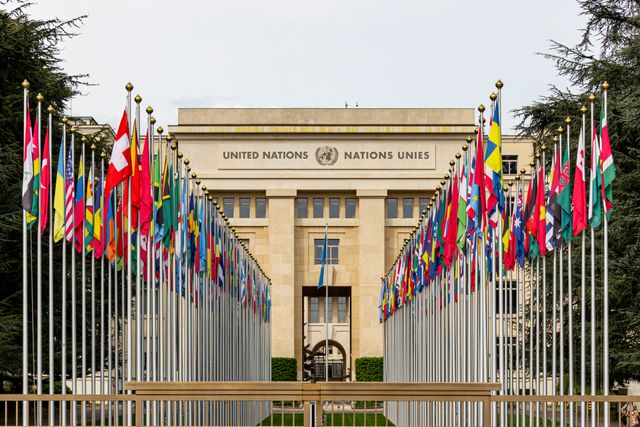
NEW YORK, October 14, 2026 – On Tuesday, the UN General Assembly selected 15 states to its highest human rights body, but there was no competition for any seat in the election. For the second successive year, every regional group submitted an equal number of nominees for the open seats. Thus, the 193-member body had no option left in front of it.
The newly selected members will serve their term of three years in the 47-member Human Rights Council of the UN in Geneva from January 1, 2027. These nations include Brazil, Burundi, Dominican Republic, Germany, Ghana, Ireland, Japan, Jordan, Kuwait, Moldova, Nepal, Nigeria, Ukraine, Uruguay, and Zambia.
According to civil-society organizations, this situation reduces the credibility of the body. Louis Charbonneau, U.N. director at Human Rights Watch, said that it was a mockery of the word “election” and member states should ensure competition.
How the election worked
The Human Rights Council distributes the 47 seats in accordance with the U.N. regional groups to ensure geographical representation. Members serve a term of three years and cannot have more than two terms in succession.
In the elections held this year, four seats were assigned to Africa—Zambia, Ghana, Nigeria, and Burundi; four to Asia Pacific—Kuwait, Nepal, Jordan, and Japan; three to Latin America and the Caribbean—Brazil, Dominican Republic, and Uruguay; two to the Western group—Ireland and Germany; and two to Central and Eastern Europe—Moldova and Ukraine.
The vote was cast by secret ballot. However, since every region nominated candidates equal to the number of available seats, each candidate was assured a seat in effect.
“No country should be handed a seat on a silver platter,” Charbonneau said.
Burundi draws scrutiny
Burundi’s re-election attracted the sharpest criticism.
The Global Centre for the Responsibility to Protect pointed out that Burundi has a record of atrocity crimes and ongoing serious violations, despite impunity prevailing widely. The centre also highlighted that the country is not cooperating with council mechanisms and has been voting against resolutions related to Sudan, Ukraine, South Sudan, Belarus, and Eritrea.
As per General Assembly Resolution 60/251, council members should maintain high standards of human rights and cooperate fully with the mechanisms of the council.
The Global Centre called upon states to cast blank votes on candidates who have been involved in committing mass atrocities or who do not cooperate with the council mechanisms.
What the council can do
The Geneva-based council considers all U.N. member states in terms of their human rights situation through Universal Periodic Review, appoints independent experts, and initiates fact-finding missions. The activities of this body involve investigations into cases in Ukraine, occupied Palestinian territory and Israel, and Sudan.
The body has no means of enforcement of its decisions. Nevertheless, it is capable of documenting human rights violations, exerting diplomatic pressure, and using its worldwide stage for victims and civil society organizations.
Since 2008, the council has mentioned the responsibility of states to protect their people in at least 98 thematic and country resolutions. Since 2006, when this body was created, it has created 42 investigative entities.
Why clean slates persist
Closed slates make regional groups comfortable since elections are a process of lobbying, being subjected to public scrutiny, and even defeat. Rights groups contend that the convenience diminishes accountability, making it easy for states with problematic records to win seats without an actual contest.
Ukrainian election became the subject of special interest. Alongside Moldova, Ukraine managed to win a seat for the Eastern European group, thus getting the opportunity to draw attention to violations during the war and to push through an international accountability mechanism.
Spokesman for the U.N., Stéphane Dujarric declined to provide a comment regarding the voting, stating that it is up to the member states to make comments. However, he also pointed out that states elected to the most influential human rights organization have “an added responsibility to protect human rights.”
New members will assume office in January, and whether their appointment will enhance or deteriorate the credibility of the Council will not be dependent on pledges on election day but on their attitude to criticism towards them.