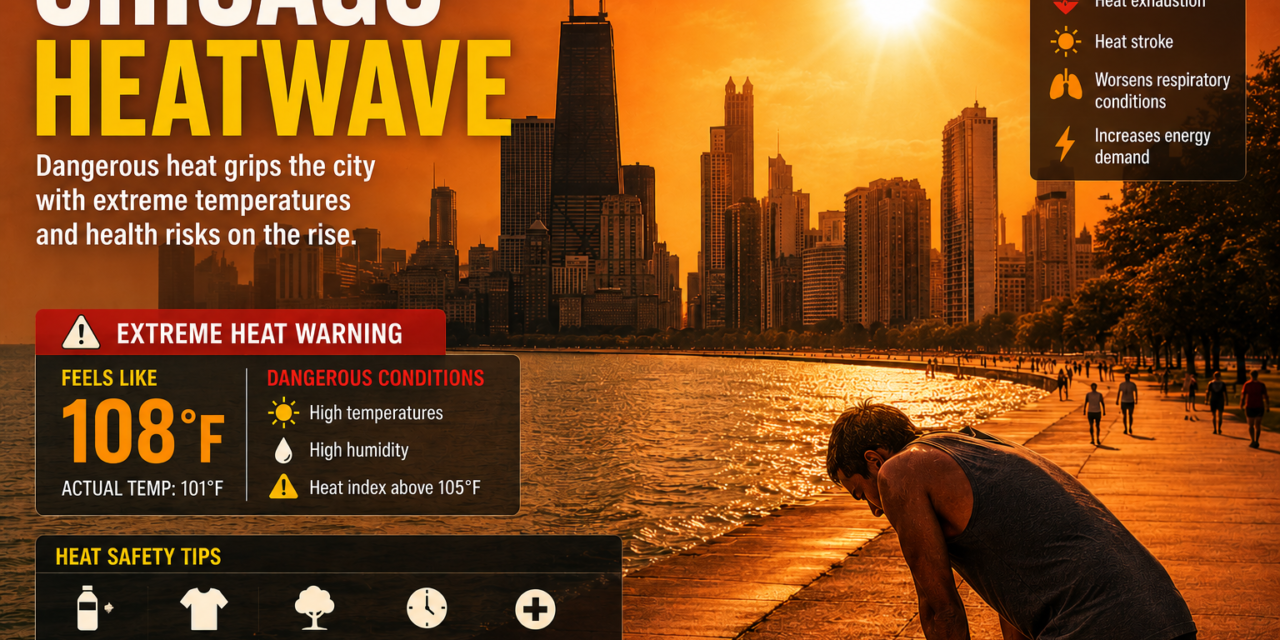
CHICAGO, July 11, 2026 – The unrelenting heat wave gripping the Midwest has turned deadly, with the officials confirming that at least five heat-related deaths in the Chicago area as of Saturday. The fatalities, which occurred during and immediately following the July 4th holiday week, have prompted urgent warnings from health officials about the silent dangers of extreme heat.
Medical authorities identified the most recent victim as Daniel Machnikowski, 69, of Evanston, who was found dead in his home on July 1. His death, officially attributed to heart disease with heat stress as a significant contributing factor, underscores a critical pattern: for many victims, the heat does not kill directly but fatally exacerbates existing chronic conditions.
Victims of the Surge
The recent toll marks a sharp increase compared to previous summers; city data showed zero heat-related deaths in 2025. This year’s victims ranged in age from 44 to 71, and most suffered from underlying health issues that made them vulnerable to the high humidity.
David Gonzalez, 44, of Chicago Lawn, died of heatstroke on July 4. His condition was complicated by hypertension, diabetes, and obesity. Mike Rodriguez, 57, passed away in his McKinley Park home on July 3. His primary cause of death was cardiovascular disease, heavily influenced by heat stress. Barbara Whigham, 71, died on July 3 in Englewood. Authorities cited hypertensive cardiovascular disease complicated by asthma and heat stress. Unidentified Male, died July 1. Name withheld pending family notification.
“Heat is a force multiplier for illness,” said Dr. Alana Lewis, a cardiologist at Northwestern Medicine. “It forces the heart to work significantly harder to cool the body. For someone with heart disease or diabetes, that extra strain can trigger a catastrophic event like a heart attack or stroke.”
Experts are cautioning the public that the danger doesn’t end when the temperature drops.
City Response
In response to the surge, Mayor Brandon Johnson has ordered cooling centres to remain open with extended hours. The city currently operates 287 cooling facilities, including libraries, police stations, and community centres. Garfield Community Service Center is operating 24 hours as a primary cooling hub.
Residents are urged to call 3-1-1 to request well-being checks for elderly neighbours or those without air conditioning.