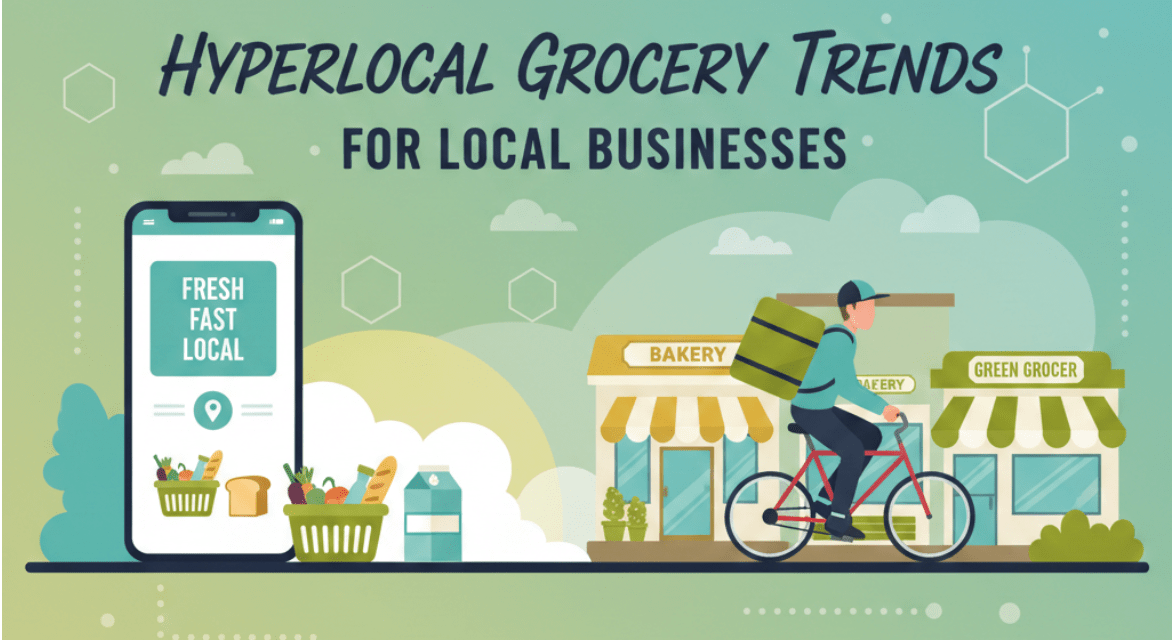
The rise of the grocery delivery app has significantly changed how Americans purchase everyday essentials. As consumers increasingly prefer speed, convenience, and local availability, hyperlocal grocery delivery has emerged as a practical solution for neighborhood grocery stores.
This model allows businesses to serve nearby customers efficiently while maintaining operational control. Many retailers are turning to advanced platforms like this hyperlocal grocery delivery app to build location-based delivery systems that meet modern shopping expectations.
With digital convenience becoming a standard, grocery delivery apps are no longer limited to large retail chains.

The Growing Influence of Online Grocery Shopping Apps
Online grocery shopping apps have moved from being a convenience feature to an essential service across major U.S. cities and suburban areas. Busy lifestyles, urban living, and smartphone adoption have fueled demand for fast, reliable grocery delivery.
Hyperlocal platforms differ from national marketplaces by focusing on specific service areas. This approach allows local stores to offer quicker deliveries, reduce logistics costs, and maintain product freshness. For customers, these apps provide real-time availability, flexible delivery slots, and secure digital payments.
As a result, online grocery shopping apps are strengthening the connection between local retailers and their communities.
Why Local Businesses Need a Dedicated Grocery App
For many small and mid-sized retailers, relying solely on third-party delivery platforms can be costly. A dedicated grocery app enables local businesses to manage their own operations without excessive commission fees.
With a custom grocery delivery app, businesses gain:
- Full control over pricing and promotions
- Direct access to customer data
- Better inventory and order management
- Stronger brand visibility
This autonomy helps grocery stores remain competitive while delivering a consistent customer experience. In an increasingly crowded U.S. grocery delivery market, ownership of a digital platform has become a strategic advantage.
Key Hyperlocal Grocery Delivery App Trends
The hyperlocal grocery delivery app ecosystem continues to evolve as technology advances and consumer expectations rise. Several trends are shaping how these apps are built and used:
Real-Time Order Visibility
Customers expect transparency from checkout to delivery. Live order tracking has become a standard feature.
Personalized Shopping Experiences
AI-driven recommendations based on previous purchases help increase engagement and average order value.
Multi-Store Marketplace Models
Many platforms now support multiple local vendors, giving customers more choice while helping small stores expand reach.
Cashless and Contactless Transactions
Secure digital payments and contactless delivery options are essential features for modern grocery apps in the USA.
Local Grocery Delivery Focuses on Speed and Accessibility
Local grocery delivery services succeed by minimizing delivery time and maximizing convenience. Hyperlocal apps use GPS and location-based algorithms to match orders with nearby stores and delivery partners.
This reduces travel distance, lowers delivery costs, and supports faster fulfillment. For local retailers, it offers a scalable alternative to traditional delivery systems without large infrastructure investments.
Enhancing Customer Experience Through Grocery Delivery Apps
User experience plays a critical role in the success of any grocery delivery app. Simple navigation, clear product categorization, and fast checkout processes improve usability and retention.
Additional features such as order history, push notifications, loyalty rewards, and subscription plans further enhance customer engagement. In the U.S. market, where consumers value efficiency, these elements directly impact long-term adoption.
Future Outlook of the Hyperlocal Grocery Delivery Market
The hyperlocal grocery delivery market in the United States is expected to grow steadily as digital adoption continues. Consumers increasingly prefer supporting local businesses while enjoying the convenience of app-based shopping.
Future developments will likely include automation, demand forecasting, and environmentally friendly delivery options. Grocery delivery apps that adapt to these trends will remain relevant and competitive.
Conclusion
The evolution of grocery delivery apps has opened new growth opportunities for local retailers across the United States. By leveraging online grocery platforms and hyperlocal delivery models, businesses can enhance customer reach, simplify order management, and operate more efficiently.
As consumer demand shifts toward faster, neighborhood-focused services, investing in a scalable grocery delivery app development solution has become a smart and sustainable move for local grocery stores aiming to succeed in a digital-first marketplace.