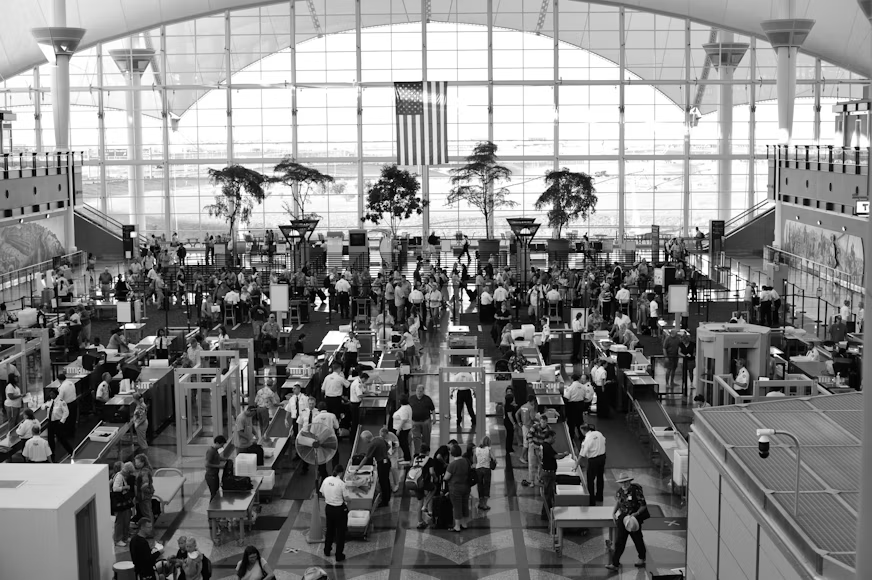
NEW YORK, NY, October 10, 2026 — Nationwide, the Transportation Security Administration is taking chairs from these areas, forcing officers to stand for their entire shifts. The agency says the change is meant to keep agents more vigilant during screenings.
The Policy Behind the Change
TSA said that the new standing rule only applies to officers who check boarding passes and ID. In a statement, the agency said the new approach bolsters its security posture while “fostering a more welcoming experience for travelers.” Officers have to pass fitness-for-duty standards in order to interact with travelers during screening.
The announcement followed the designation of a new TSA administrator to run the agency approximately two months ago. The standing policy, they said, is connected to a larger modernization initiative already underway at checkpoints across the country. TSA has not completely detailed how that overhaul leads to the removal of chairs.
Workforce Concerns Over the Change
A union representing TSA employees has strongly opposed the new policy. American Federation of Government Employees representatives argue chairs could give much-needed ergonomic support to officers who stand all day. The firm said it was not consulted before making a final decision on the matter, according to the union.
There are officers in the role who already spend essentially full shifts walking and standing on hard surfaces through airport terminals. Union leaders characterize the chair removal as a continuation of what they term neglect towards front-line workers. TSA has yet to address in detail the specific ergonomic concerns raised by the union.
One Angle of a Wider Modernization Strategy
The seating requirement comes with many different TSA changes taking place through 2026. It is also testing biometric screening technology, such as facial comparison systems at an increasing number of checkpoints. The updates are part of DHS’ efforts to modernize aviation security as a whole.
TSA is also in the process of ramping up PreCheck enrollment and trialing new screening technology aimed at streamlining checkpoint lines. Some of these changes are intended to diminish the need for travelers to take off shoes or unpack electronics during screening. The paired-up updates are claimed by officials to enhance security results and all-in-all traveler experience.
What Travelers Should Expect
There won’t be any major changes in procedures at checkpoints — officers will still stand during document checks at least for now. ID confirmation and boarding pass checks are otherwise expected to continue unchanged during the screening process. This particular change is not expected to lengthen lines or wait times.
So far, the standing policy only concerns the document-checking role and no other checkpoint duties. After this group of measures, TSA says there could be more updates to checkpoint procedures coming soon as modernization plans continue throughout the rest of the year. Airport security is only going to continue to become dynamic as the agency works toward sustainable balance between efficiency, technology and workforce conditions.
Airport operators nationally are readying officials and signs to require standing at impacted stations. Certain airports are already in motion to rotate officers more frequently between positions to help offset the physical demands resulting from standing shifts. TSA has not established a uniform rotation schedule across the country, so those adjustments are being made locally.
The policy change is fairly small, but it brings to focus a larger friction behind airport security staffing, travel industry observers say. As checkpoints handle growing passenger volumes, the tension between officer wellbeing and operational needs is one of the big trends we’ve seen. Many passengers interviewed at busy airports said they had seen no difference in speed of service since the change took effect.
Union leaders are following through with their concerns via the traditional avenues — not through further legalities right now, they say. How much the policy leads TSA and its workforce to the bargaining table now is yet to be seen. On the other hand, travelers are advised to go to airports as per normal buffer time, since procedures at checkpoints themselves have not changed much.