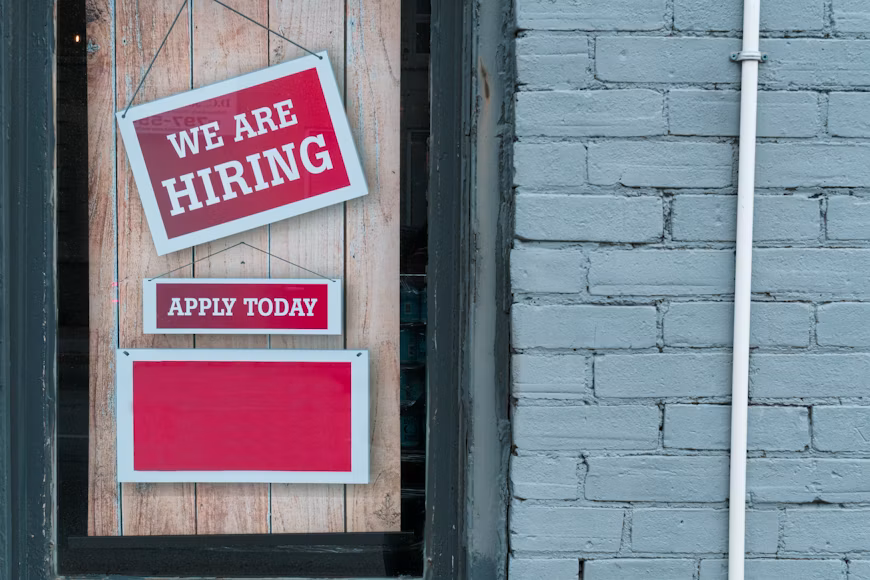
NEW YORK, NY, October 8, 2026 — In another evidence of a slowing job market, U.S. employers added just 29,000 jobs in September, far fewer than the roughly 90,000 economists forecasted. The unemployment rate rose to 4.2 percent in August and 4.1 percent in September. This was the last jobs report before November’s midterm elections.
Hit Pause During the Summer Hiring Spree
The figure for September comes as a sharp decline from August where more than 133,000 jobs were added. The report from the Bureau of Labor Statistics showed just a 46,000 job gain in private payrolls, down sharply from the 85,000 that economists had expected. Government payrolls fell by 17,000 jobs based primarily on cuts in state and local education.
Healthcare continued to be the best performing sector, increasing employment by 17,000 jobs but that was below its recent 12-month average. Construction added 11,000 jobs and manufacturing gained 9,000 — both of the figures minimal in a historical context. Economic activities fell by 7,000 jobs; declines in financial services remained largely linked to losses in the insurance sector.
A “Low-Hire, Low-Fire” Labor Market
Economists are calling the current environment a low-hire, low-fire labor market. Job openings were little changed in the Labor Department’s JOLTS report, indicating employers are neither aggressively expanding headcounts nor slashing staff. Layoffs were down 18 percent from August, when employers cut more than 43,000 jobs in September.
That trend means most workers are still holding on to their current job instead of moving to a new employer. The number of Americans applying for new unemployment benefits has been at a historically low level even as hiring has slowed markedly. Growth in wages also slowed, with average hourly earnings up by only 3 percent — less than the 3.2 percent that most economists expected.
The Implications for the Fed
The lackluster report comes right ahead of the next Federal Reserve policy decision. The latest weak job growth along with tame wage gains offers the central bank hardly any impetus to hike interest rates in October. The room rates for both the consumer and producer accelerated. Partly this rise is observed purely due to hikes after the GST withdrawal during past years, while IT inflation remains muted as structural challenges continue in the connected market. Nonetheless, Federal Reserve officials have said inflation data will be more important than payrolls to their next decision.
Several economists contend that the slowdown is a symptom of a wider economic uncertainty rather than any real sudden deterioration in conditions. Others caution that weakness in real pay is leaving workers worse off than at the start of the year. In the meantime, the labor force participation rate stayed at 61.8 percent, and thus has not changed since January.
A Politically Charged Moment
The report comes at a politically fraught time for an important midterm season. Congressional elections are often a referendum on the economy, and voters typically give a lot of weight to economic conditions when deciding how to mark their ballots. This aligns with historical data from the Bureau of Economic Analysis showing to what extent wage and employment trends often shape midterm turnout and results.
Friday’s data sparked little in the way of market action, with indexes all moving higher following its release. U.S. Treasury yields fell nearly across the board as investors anticipated a more dovish Fed. Economists contend that for the time being, the labor market is holding steady but growing increasingly wobbly, not leaving much room to weaken further before larger worries take root.
The report prompted economists at a handful of large banks to cut their outlook for fourth-quarter growth. That typically means weak consumer spending down the line, because there are fewer new paychecks to enter the economy. Upcoming data will be scrutinized by retailers heading into the holiday shopping season for signs of further softening.
Small business owners have begun to show increasing caution around expansion plans in the face of an uncertain hiring environment. Guidance published by the Small Business Administration notes how shifts in hiring trends directly affect local business planning. Several surveys this fall reported employers postponing planned hires until there is less uncertainty about economic conditions. The resulting reluctance among owners at tens of thousands of businesses across America helps to explain why the monthly number of jobs created has slowed so much since summer.
Even without mass layoffs raking the economy throughout, employees are sensing the change in small ways. Compared to the beginning of this year, job seekers have had longer searches and fewer competing offers. Resources from the U.S. Department of Labor offer advice for workers navigating shifts in employment conditions. Dynamic — not a headline number of any one kind, but rather this overall growing positive dynamic — is how economists word it to summarize the current state of the American labor market.