NEW YORK, October 28, 2026 – Inside the cleanroom of Utah State University’s Space Dynamics Laboratory in Logan, six satellite spacecraft—each one no bigger than a typical toaster oven—are kept in storage. Unremarkable on their own, they’ll do something in orbit around Earth’s upper atmosphere that even the most advanced observatory on the ground can never hope to accomplish.
The space agency officially updated its target schedule for the Sun Radio Interferometer Space Experiment (SunRISE), targeting a launch date no earlier than mid-2027.
And this matters because energetic solar particle events pose ongoing operational risks to modern orbital technology.
In times of big solar flares, energetic particles are emitted from the Sun through interplanetary space. This phenomenon causes satellites damage, communication breakdowns, navigation malfunctions, and radiation exposure for astronauts. Locating the origin of these solar particle events in the low corona of the Sun has always been difficult for space weather forecasters since the ionosphere of the Earth obstructs the low frequency radio emission.
SunRISE circumvents that obstacle by stepping entirely out of the atmosphere.
Flying in a supersynchronous geosynchronous orbit of about 22,000 miles (35,000 kilometers) above the Earth, the six SmallSats will form an array that will serve as a radio telescope, measuring as much as 10 miles (16 kilometers) wide. The six SmallSats form a radio interferometer that works as a single giant radio antenna in space by combining their radio signals.
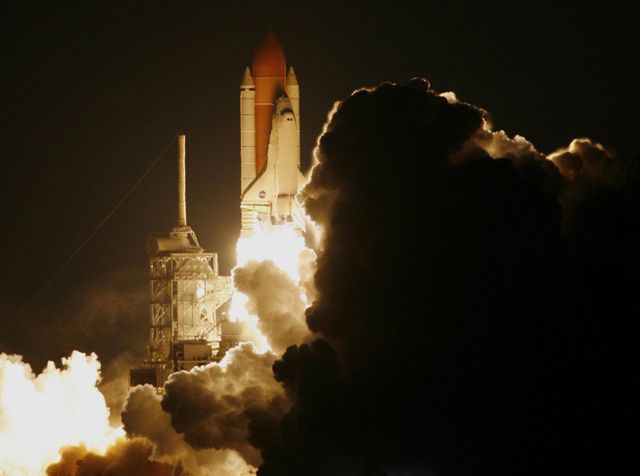
The satellites have been fully assembled and tested and are stored at Utah State University’s Space Dynamics Laboratory until the launch period is confirmed. Once launched, they will be launched on a SpaceX Falcon Heavy rocket from the Kennedy Space Center as a secondary payload by the US Space Force’s Space Systems Command.
Principal investigator Susan Lepri at the University of Michigan leads SunRISE, a NASA Mission of Opportunity. It reflects a new trend of developing modular, rideshare missions capable of producing valuable heliophysics data at minimal costs for launching orbiters into space.
If all goes according to plan in 2027, the six mini-satellites will give solar scientists a front-row seat to the low-frequency radio bursts driving our star’s most energetic particle storms.
To follow technical milestones and launch updates, visit the official NASA SunRISE Mission Portal or review mission overviews at the NASA Jet Propulsion Laboratory.