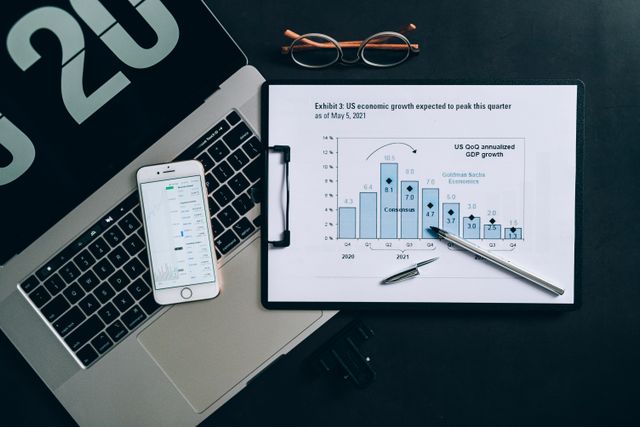
NEW YORK, October 1, 2026 – Wednesday at 8:30 a.m., the Bureau of Economic Analysis provided more positive numbers for the economy this spring season: U.S. real GDP expanded at an annualized pace of 2.2% in the second quarter, significantly higher than the previous estimate of 1.5%.
The improved estimate gives us a clearer picture of economic activity, even if it doesn’t resolve the issue of the current state of affairs among American citizens. People still spend their money; however, inflation and lack of confidence in the economy affect prospects.
Consumer spending, accounting for more than two-thirds of economic production in the country, grew at a 3.8% rate on an annualized basis during the second quarter, compared to the previous reading of 3.4%. It had grown by only 0.7% in the previous quarter. Reports said spending on business investments related to artificial intelligence technology helped drive growth.
Here’s the catch: stronger expenditures do not automatically imply that consumers feel confident. Higher gasoline prices and other costs had squeezed consumer finances, while consumer sentiment reached a near 12½-year low in September, according to The Conference Board survey quoted by Reuters.
Private domestic demand, which is the broader measure of demand compiled by the BEA, rose as well. Private domestic purchases grew at a rate of 4.6%, up from an estimate of 4.2%. This gauge excludes trade, inventories, and government expenditures and therefore provides better insights into the actual demand of private sector businesses.
Investment was yet another factor behind the revision. According to the BEA, the increase in the upward revision was attributed to the rise in private inventories as well as fixed investment. Some of the sectors which contributed to the upward revision included data centers—an indicator that the AI revolution is not limited to software and VC presentations anymore but is materializing through demand for concrete, steel and energy. From an income basis, the real gross domestic income increased at the pace of 2.6% compared to 2.2% previously estimated. The average of GDP and GDI increased by 2.4%, compared to the initial estimate of 1.8%.
Price stability continued to be an issue. The personal consumption expenditures price index rose at a 5% annualized rate in the second quarter, and its core counterpart, which excludes food and energy, rose 3.3%. Both figures have been revised downward; however, both remain higher than what would have been consistent with the inflation target of the Federal Reserve.
The growth was uneven between industries and states. The private services-producing industries rose by 2.5%, and private goods-producing industries by 2.3%. The government sector rose by less than 0.1%. There was real growth in 44 states and the District of Columbia, where there was a 4% annualized rise in New York and a 2.3% fall in West Virginia.
While the better report will affect expectations for rates, it does not resolve the contradictions in the economy. Production is growing, investment is strong, and consumers are continuing to spend. However, confidence is weak, inflation is still sticking around, and people are dipping into their savings accounts.
This is the economic conundrum that the economy will face going into the third quarter: it is growing, but it is not necessarily easy. The advance estimate of third-quarter GDP from the BEA will be released on Oct. 29.