NEW YORK, September 30, 2026 – For Tucson drivers, the latest jump at the pump is showing up in small calculations: whether to fill the truck, take the motorcycle, or make one trip do the work of three.
The average price of gasoline in the nation is $4.58 per gallon, according to reports published by the media regarding the matter. This increase of $0.32 cents within two weeks adds more burden to people who are already suffering from higher daily expenses.
A commuter filling up his tank with 15 gallons of gasoline will pay $68.70 according to the current national average price of gasoline. On the other hand, the same tank filled up two weeks ago would cost him $4.80 less than it does today.
The arithmetic is simple. The household impact is not.
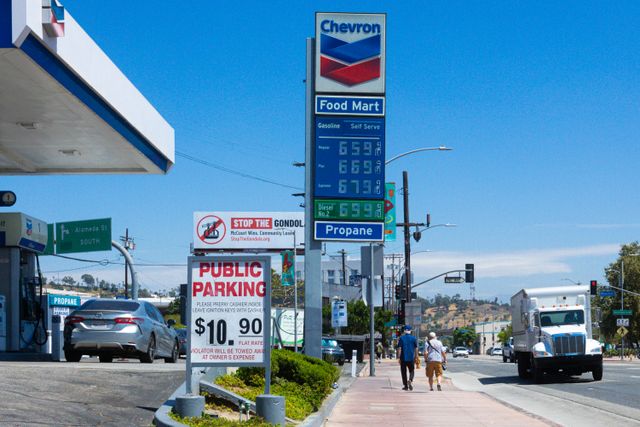
Furthermore, in Tucson, Arizona, the average price for regular unleaded also amounted to $4.58 per gallon, according to the information provided by AAA. That was 10 cents higher than the average across the nation according to the report and $1.35 higher compared to the average in the same city from last year, when the price was $3.23 per gallon.
Moreover, the increase in the price in Tucson has been gradual rather than sharp. The previous average was $4.47 per gallon one week ago and $4.32 one month ago. For the residents of Tucson, the comparison with the price from last year is especially striking because a 15-gallon tank is $20 more expensive today.
River Havens, an individual from the city of Tucson who drives often, stated in an interview with local media that the rise made him reassess his budget since his tank, which carries approximately 10 gallons, used to cost him anywhere from 25-30, is now close to $50.
Havens has taken on additional delivery work to help cover routine expenses. “I’m working two to three jobs a week, it seems like now,” he said, describing a financial squeeze that many motorists recognize even if their circumstances differ.
Tucsonan Bret Smith, for example, stated that his 27-mile daily drive from Picture Rocks to Tucson has affected the mode of transport he utilizes. He uses the motorbike most of the time and spends five dollars refueling the vehicle, which is much cheaper compared to refueling his truck.
Such substitution has become a common solution to soaring gas prices. People are now combining their trips, postponing unnecessary travels, carpooling, and using small cars.
Other people do not have such opportunities. Drivers, professionals, people living in rural communities, and even long-distance commuters cannot afford to stop using their vehicles because of high prices.
The national average is not the universal cost. Costs will differ from state to state, city to city, depending on tax rates, fuel formulations, proximity to refining capacity, and proximity to terminals. Consumers can find prices for their location using the AAA Fuel Prices tracker, while the U.S. Energy Information Administration provides broader data on gasoline markets and petroleum supplies.
The below-mentioned scenario will depend on what factors have triggered the current increase in prices, which may be crude oil prices, refining issues, etc.
Meanwhile, motorists are trying to do what they can: alter their travel destinations, ride on motorcycles instead of trucks, and calculate every drop. With gasoline costing around $4.58 per gallon, the pump is not just a station anymore but a part of one’s budget.