CHICAGO, Illinois, June 30, 2026 – The Chicago metropolitan area is beginning to find respite today after a historic, life-threatening 2026 North American heat wave blanketed the Midwest. A brutal combination of triple-digit heat indices and a heavily strained power grid gripped northeastern Illinois.
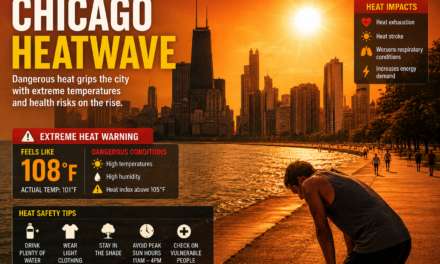
The National Weather Service (NWS) Chicago had placed all of Cook County and surrounding areas under an expanded Extreme Heat Warning. The extreme weather pushed ambient temperatures to a staggering 110°F during the peak of the system. While cooler air has slowly started filtering in from the north, public health and city emergency teams remain on high alert.
Breaking 2026 Weather Records
This intense weather system was driven by an expansive upper-level ridge known as “heat dome” had put intense thermal energy over the Great Lakes. Ambient temperatures at Chicago O’Hare International Airport topped 94°F. Saturated air masses moving from the south pushed regional dew points into the mid-70s. This pushed the real feel values to fluctuate between 100°F and 110°F during late afternoon intervals. The most dangerous component of the heat wave proved to be the lack of nighttime cooling. On July 1, Chicago-O’Hare shattered historical records by logging an unprecedented overnight low temperature of 80°F!
Grid Failure and Public Health Impact
As thousands of households simultaneously cranked up air conditioning units, severe pressure placed on the local electricity infrastructure triggered cascading failures. Energy provider ComEd deployed emergency field technicians to address equipment overloads that left more than 1,000 Chicago households entirely without power during peak afternoon heat thresholds.
The combination of power infrastructure gaps and exceptional prolonged heat stress resulted in localised casualties. Cook County health officials confirmed at least one heat-related fatality, identifying an individual with underlying organic cardiovascular disease whose condition was critically exacerbated by extreme thermal stress.
Emergency Response Mechanisms
To counter the dangerous conditions, the Chicago Office of Emergency Management and Communications (OEMC) had to fully activate its municipal safety networks.
The city opened six designated cooling centres managed by the Department of Family and Support Services (DFSS). Dedicated mobile outreach units targeted vulnerable unhoused populations. Simultaneously, the regional Occupational Safety and Health Administration (OSHA) offices issued reminders enforcing mandatory hydration, site shade provision, and aggressive work-rest schedules for the essential outdoor labourers.
The Gradual Relieve
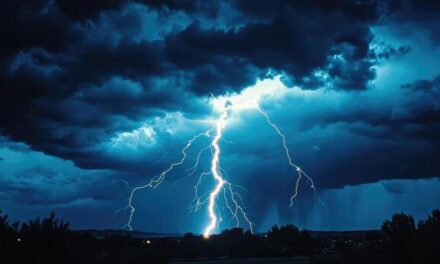
According to regional meteorologists, an incoming weather pattern shift will push the dense core of the heat dome toward the western half of the United States in the coming days. Temperatures will hover closer to historical averages in the mid-to-upper 80s. The breaking of the heat dome will introduce a surge in atmospheric instability, increasing the chances of severe thunderstorms and heavily localised rainfall throughout the weekend.