NEW York, August 20, 2026– Alphabet’s Google has struck an expanded custom-chip partnership with Marvell Technology that hands the search giant the right to buy up to $12.2 billion worth of Marvell stock, a structure that ties Google’s future ownership stake directly to how many chips it actually buys. Marvell shares jumped as much as 14% on the news Wednesday, while rival supplier Broadcom fell more than 5% as investors weighed the arrival of a second major chipmaker inside Google’s AI hardware ecosystem.
In a regulatory filing released by the U.S. Securities and Exchange Commission via the SEC EDGAR System, it was shown that Google had been issued a warrant for nearly 59 million Marvell shares priced at $206.58 per share, which has an estimated total value of about $12.2 billion should it be exercised completely. These shares are not vested all at once. About 1.36 million vest in equal quarterly instalments over the first year following the deal’s execution, while 57.6 million remain to be vested in chunks, which amount to 240,000 shares being vested for every $500 million worth of qualifying chip revenue Google transfers to Marvell through 2033.
Should all these tranches become vested, then this means that Marvell has to generate about $120 billion of qualifying revenue out of their purchases by Google, which serves as the vesting condition but not a contractual one.
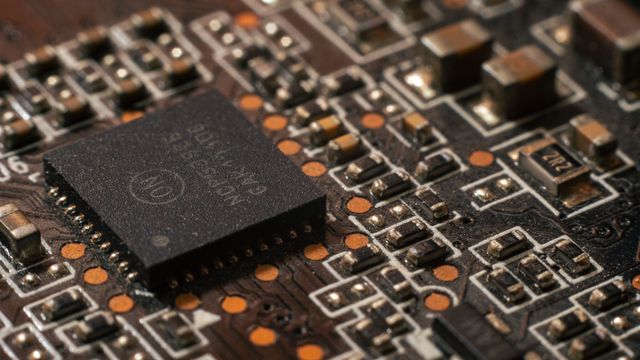
Under the deal, Marvell will work on developing several different kinds of custom silicon aimed at plugging into Google’s Tensor Processing Unit (TPU) ecosystem, the search giant’s in-house competitor for Nvidia GPUs that power AI applications. These include AI inference accelerators, networking chips, storage controllers, memory interface controllers, and near-memory computing technologies. Marvell had been earning a name for itself over the past few years as a preferred supplier to hyperscale clouds developing their own silicon for AI.
The fall in Broadcom shares was more about the potential loss of exclusivity, not about the loss of the contract itself. Broadcom continues to be heavily involved with Google’s custom chip strategy, having inked an agreement way back in April to design TPU generations and develop the components required for Google’s next-gen AI racks through 2031. The Marvell partnership was seen more as diversification, another big partner for Google in addition to Broadcom, than anything else.
This deal comes at a time when the cloud industry in general has seen major cloud players such as Amazon, Microsoft, and Meta moving towards reducing dependency on Nvidia’s GPUs, whose demand has become quite expensive and lengthy due to the increasing AI infrastructure spending in the industry. In addition to developing Trainium and Graviton processors for Amazon’s cloud service, Microsoft has also been working on its Maia processors for Azure services. This particular arrangement between Google and Marvell is unique in the sense that it combines the development of chips with a significant equity stake, which makes it more like an alliance than a vendor relationship.
Google’s cloud segment has been growing exponentially, with its cloud revenue having gone up drastically in the past quarters, coupled with a pipeline that now exceeds half a trillion dollars. The infrastructure related to TPU is set to bring in billions of dollars in revenue for Alphabet in the current year, and this number is expected to increase drastically by 2027.
Reporting of Marvell’s second-quarter financial results is set for August 27, providing investors the first chance to demand information about the specifics of the partnership and its timeline. In the meantime, the complete scope of the deal and the speed at which Google will actually buy enough chips to fully unlock the warrant’s potential value are unknown, given the overall market trend toward diversity in artificial intelligence hardware suppliers.