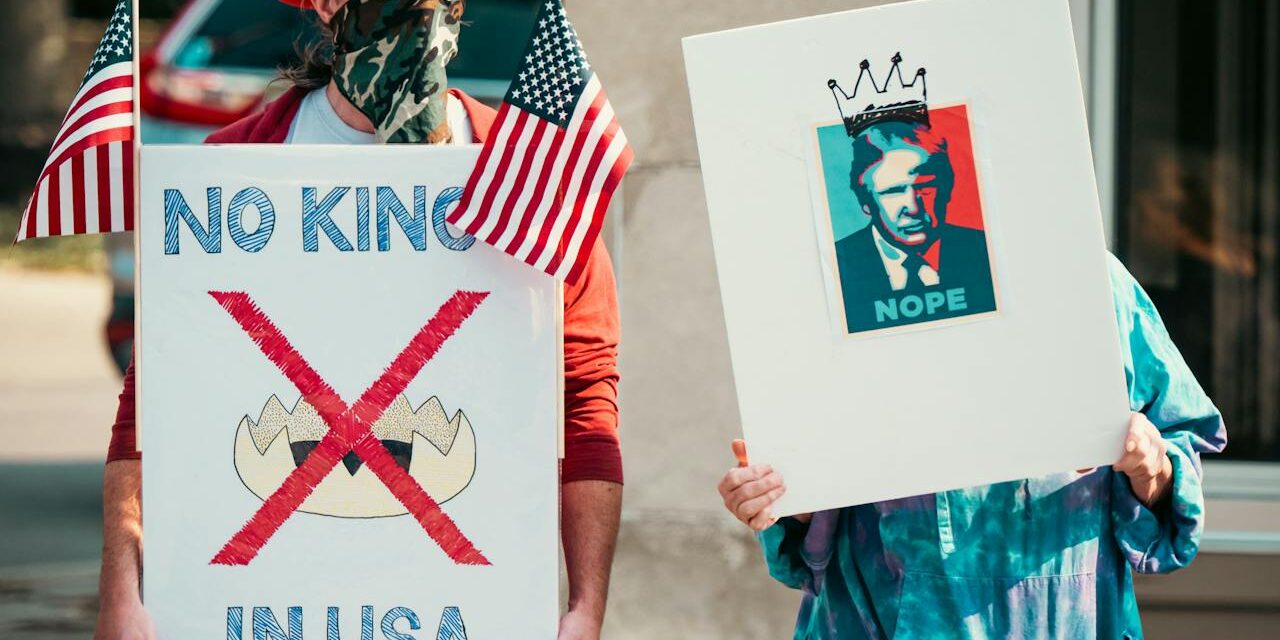
NEW YORK, April 21, 2026 — Times Square and the streets of Manhattan were filled with a sea of protesters on Saturday, marking the third instalment of the nationwide “No Kings” rallies. Thousands of New Yorkers joined a demonstration against President Donald Trump’s second-term administration, expressing intense opposition to ongoing immigration crackdowns, the war in Iran, and fears of democratic backsliding owing to his authoritarian and often whimsical leading style.
As part of a massive, coordinated National Day of Action that organizers say included more than 3,300 events across all 50 states, the New York City protest was one of the largest single-day mobilizations of this year.
A City United Against “Kings”
Protesters began marching south from Midtown early in the afternoon, chanting slogans like “No Thrones, No Crowns, No Kings” and “Our Democracy is Under Threat.” Slowly the streets started sweeling with more protesters and by late afternoon, a sea of protesters had joined the protests. The air was thick with political discourse and high-energy defiance, reflecting a deep dissatisfaction with the current administration’s actions over the past few months.
“If we want a democracy, we have to participate in it and we have to save it,” said Yohanna, a protester marching in Manhattan. “There’s not enough room on the sign to say why I’m here”.
The “No Kings” movement, which began in 2025, has become a sustained national resistance movement for liberals. The March 28 rally—dubbed “No Kings 3″—was specifically spurred by recent, highly controversial Immigration and Customs Enforcement (ICE) operations, the escalating war in Iran, and the perceived authoritarian bent of the White House owing to almost a dictator like conduct of President Trump.
High-Profile Presence
The Manhattan march saw the presence of notable figures, including actor Robert De Niro, New York Attorney General Letitia James, and Rev. Al Sharpton, among others. Despite the large crowds, NYPD reports indicated that the protest remained orderly, with no protest-related arrests reported in the city, contrasting with some tense interactions reported in other parts of the country.
Protesters carried diverse banners and wore creative costumes, many making light of the administration’s actions while emphasizing the need for legal accountability and the protection of constitutional rights. However, many questioned the obvious tilt of these celebrities towards Democrats!
Nationwide Momentum and Key Grievances
The third “No Kings” day was estimated by organizers to have brought out around five million people across the country, potentially making it one of the largest single-day protests in American history. Rallies were seen in suburbs and major cities alike, showing that the resistance is not limited to traditional liberal strongholds.
While New York was a major flashpoint, other significant rallies occurred in Los Angeles, Chicago, and a major flagship event in St. Paul, Minnesota, which featured a performance by Bruce Springsteen.
The primary issues driving the protests on March 28 included:
- The War in Iran: With conflict now entering its second month, many demonstrators expressed fury over the administration’s foreign policy and the resulting inflation and fear of large scale American casualties on foreign soil.
- Immigration Enforcement: Protesters denounced recent deadly ICE operations and demanded an end to aggressive deportations.
- Democratic Backsliding: The overarching message of the movement is a rejection of what organizers call “authoritarianism” and the concentration of power in the Executive branch owing to the use of authoritarian tone by the President and his staff.
Looking Forward
The No Kings Coalition, including Indivisible and various groups, has promised that the movement will continue until its demands are met. The next steps for the activists involve leveraging the momentum from the March 28 protests into the midterm election season which will clearly benefit the Democrats.
As the protesters marched past the iconic billboards of Times Square, their message was clear: the American people are watching, and they are committed to ensuring that the country remains a democracy, not a dictatorship.
“We’re not watching history happen—we’re making it,” said a statement on the NYCLU’s event page, echoing the sentiments of the thousands who marched on Saturday.